
Commercial Sound and Video Systems



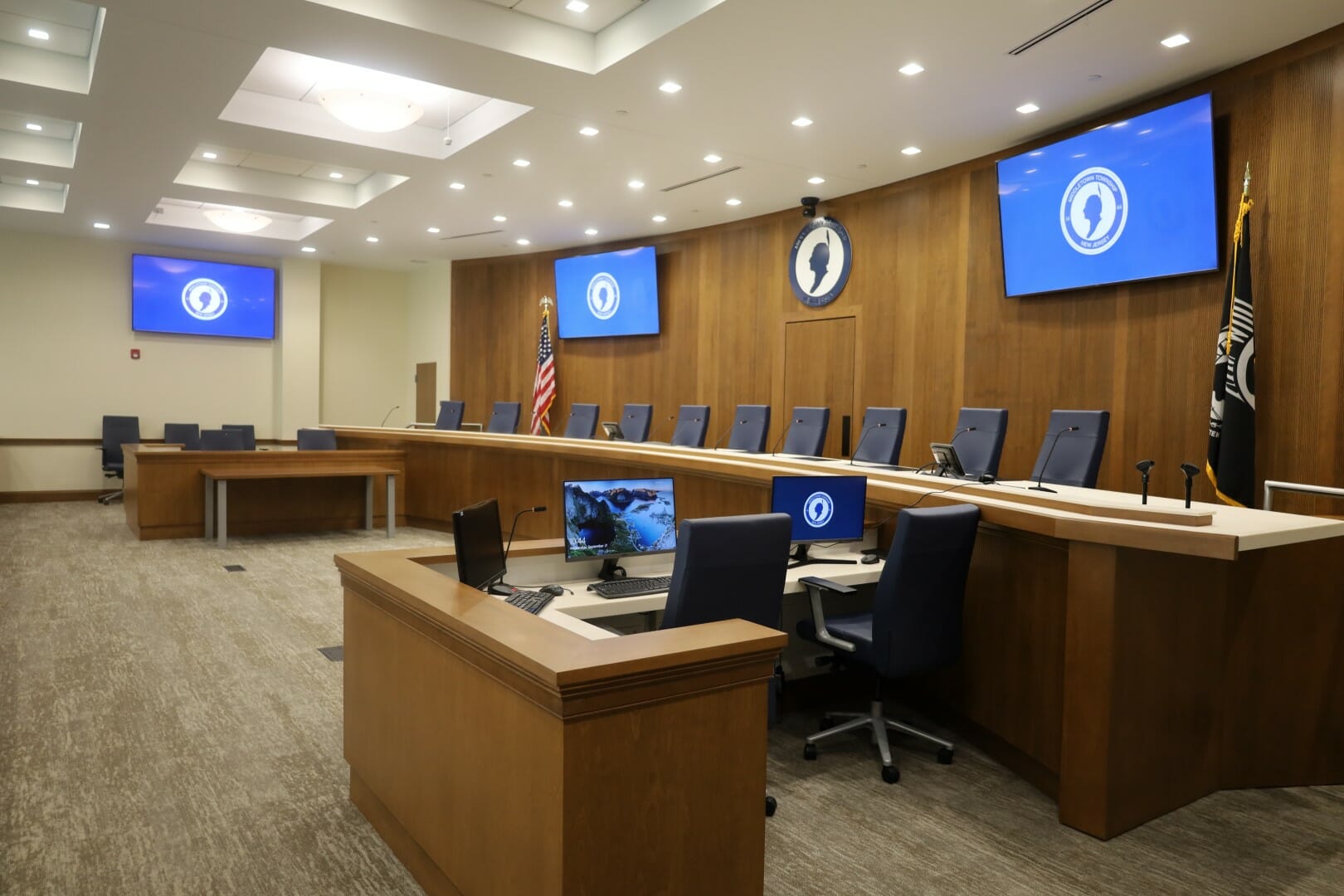
If you manage IT or facilities for a municipality, a courtroom recording system isn’t just another piece of AV hardware — it is the official record. When a microphone drops out during witness testimony, or a digital file gets corrupted before it reaches the transcriptionist, that’s not just an IT ticket. It’s a legal liability.
Many municipal courts are still running on recording setups patched together over the last decade. As courts shift toward hybrid hearings and digital evidence presentation, those legacy systems are starting to show the cracks.
A courtroom recording system is a specialized digital audio, video, and data capture platform designed to create an accurate, verbatim record of legal proceedings. Unlike standard conference room AV, it must maintain a strict chain of custody, support multi-channel audio isolation, integrate with hybrid hearing workflows, and meet court-specific security and retention requirements.
Modern systems combine multi-channel audio capture, HD video, role-based access control, and network-based secure storage — replacing legacy physical media like DVDs and cassette tapes with auditable digital archives.
In a standard meeting room, a single mixed audio track is fine. In a courtroom, it’s a problem. If two attorneys object simultaneously while a witness is speaking, a single-channel recording mashes all three voices together — making accurate transcription nearly impossible.
A properly designed system uses multi-channel audio capture, where the judge, witness box, plaintiff’s counsel, and defense counsel each have audio recorded on isolated, discrete tracks. When the transcriptionist reviews the file, they can isolate the judge’s channel and mute everything else to hear exactly what was said.
A digital court recording system must maintain an unbroken chain of custody from the moment audio is captured to the moment it is archived. This is a legal requirement, not just a best practice.
Modern systems replace physical media with secure, network-based storage — but that shift introduces new IT responsibilities. The AV network should be segmented from the broader municipal enterprise network to prevent unauthorized access to court records.
The recording software must enforce role-based access control (RBAC). The clerk operating the system should be able to start, stop, and annotate a recording — but should not have administrative rights to delete or alter a saved file. Those permissions belong to a separate administrator role with a full audit trail.
Your courtroom recording equipment has to handle remote participants with the same fidelity as the people in the room — and most legacy setups can’t.
The challenge is routing. A coordinated AV design routes the audio from the video conferencing codec directly into the recording system’s DSP as a dedicated channel. That remote participant gets their own isolated track, just like everyone else in the room.
If your court is running a laptop microphone trying to simultaneously pick up room audio and capture a Zoom call, the integrity of the court record is at risk. That’s not a workflow problem — it’s a system design problem. For a broader look at how municipalities are approaching hybrid participation, see our guide to government and courtroom AV systems.
If the primary recording server crashes mid-trial, the proceeding halts. That’s the scenario every IT director needs to design against.
A well-designed courtroom recording system runs a primary network-based server in tandem with a localized, hardware-based backup recorder. If the network drops, the local hardware continues capturing multi-channel audio without interruption. No data loss. No mistrial risk.
For IT teams, this means evaluating the physical hardware paths — not just the software interface. Is there a single point of failure in the signal chain? If the network switch reboots, does the court lose the record? A qualified audiovisual consultant designs the system so the answer is always no.
Supporting five courtrooms with five different generations of AV equipment is an IT support burden that compounds over time. When evaluating a new system, standardization should be a primary requirement — not an afterthought.
The clerk’s touch panel interface should look and behave identically in Courtroom A and Courtroom B. That consistency reduces training time for court staff and eliminates the category of user-error service tickets that come from unfamiliar interfaces.
The National Center for State Courts (NCSC) has long emphasized that consistent, well-documented recording procedures are as important as the technology itself. Standardized systems make that consistency achievable at scale.
A courtroom recording system is a digital platform that captures multi-channel audio, video, and metadata from legal proceedings to create an official, tamper-evident court record. It replaces or supplements court reporters with a verifiable digital archive that meets judicial chain-of-custody requirements.
Most courtrooms require a minimum of four discrete audio channels — judge, witness, plaintiff’s counsel, and defense counsel — with additional channels for jury boxes, gallery microphones, or remote participants in hybrid hearings.
A court reporter produces a real-time written transcript. A digital recording system captures the audio and video record, which is then transcribed by a certified electronic reporter after the fact. Many courts use both in combination for redundancy and accuracy verification.
Recordings are stored on a network-based server with role-based access control (RBAC), maintaining a chain of custody log that tracks every access, annotation, and export event. The AV network is typically segmented from the municipal enterprise network to prevent unauthorized access.
A properly designed system includes a hardware-based local backup recorder that operates independently of the network. If the primary server fails, the backup continues capturing audio without interruption. Courts without redundancy risk a mistrial or an incomplete record.
Yes. A phased modernization approach typically starts with the recording and audio infrastructure, then adds evidence presentation and hybrid hearing capability in subsequent phases — minimizing disruption to active court schedules.
It requires a clear understanding of judicial workflows, IT infrastructure, and acoustic design — and getting it wrong has consequences that go beyond a bad install.
CSAV Systems designs, integrates, and supports government and courtroom AV systems across New Jersey, New York, Pennsylvania, and beyond — including secure courtroom recording systems, evidence presentation, and hybrid hearing infrastructure. Our 3-Year Warranty and documented system standards are built specifically for the accountability requirements of municipal and judicial facilities.
If you’re evaluating upgrades for your facility, request a free systems analysis and speak directly with an AV consultant who understands the courtroom environment.