
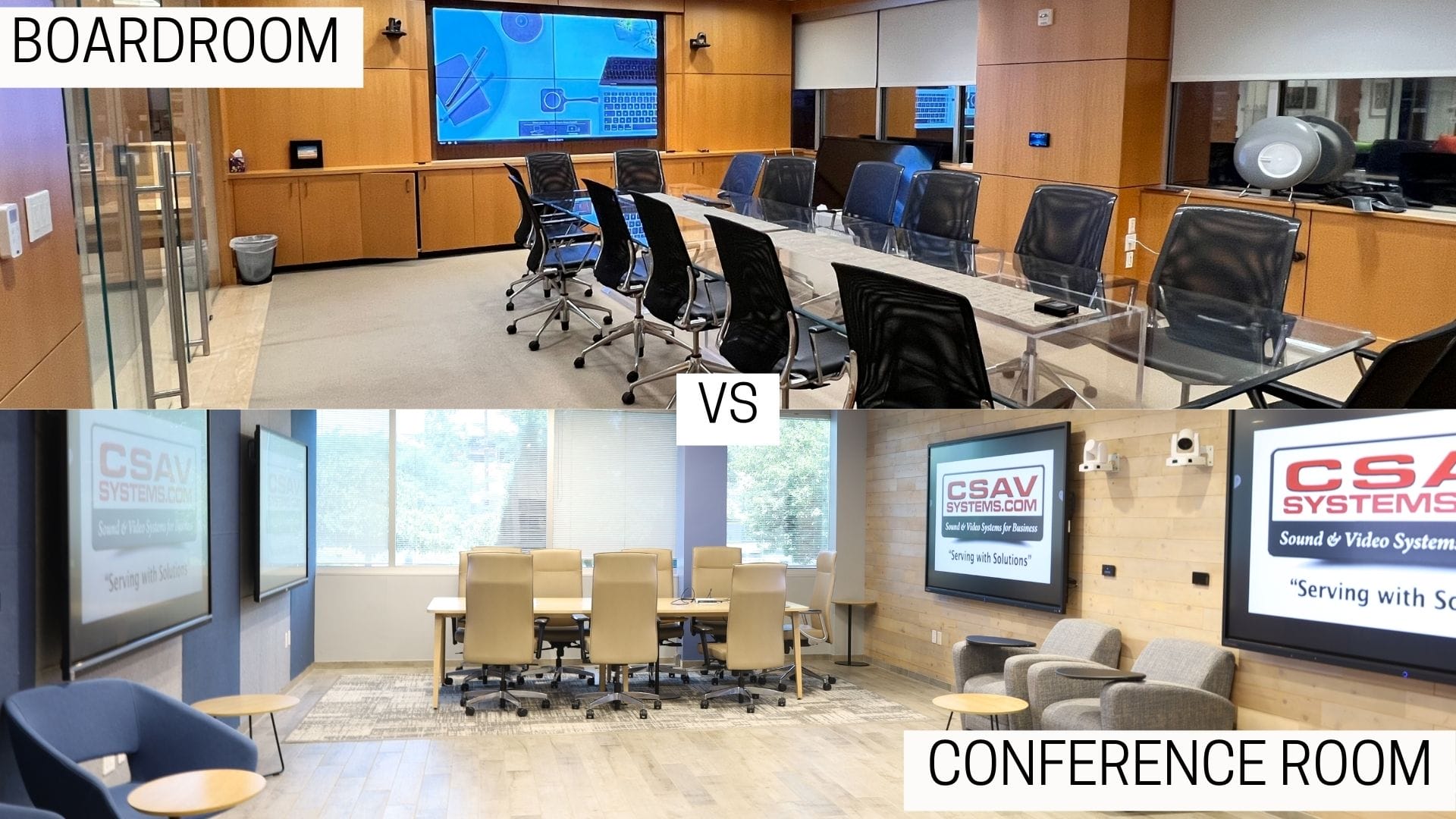
Are you Team Boardroom or Team Conference Room? In the corporate world, chances are you’ve heard the terms “boardroom” and “conference room” used interchangeably for the same room. So, which one is it? Is there even a difference?
There are multiple key differences between a boardroom and a conference room. While both spaces are used for the same overall purpose, holding meaningful discussions collaboratively, there are distinctive differences between the two rooms.
Keep reading to learn what makes a room a boardroom versus a conference room.
Why Choosing the Right Meeting Space Matters
When it comes to business, the room you choose can make or break a meeting. Ever tried to hammer out a high-stakes deal in a room that feels more like a breakroom? Not ideal. Picking the right setting isn’t just about appearances—it sets the tone, signals the importance of the conversation, and can directly impact the way people engage and the outcomes you get.
Using a dedicated boardroom for executive discussions or investor presentations, for example, not only communicates professionalism, it gives participants the privacy, equipment, and atmosphere needed for serious talks. On the other hand, hosting collaborative sessions or team brainstorms in a conference room that’s designed for flexibility helps keep creativity flowing.
Here’s why nailing your choice of meeting environment really matters:
- First Impressions Count: The right space tells clients, partners, and colleagues you mean business.
- Functionality: Boardrooms often come with advanced technology, secure communication, and seating designed for strategic discussions, while conference rooms offer more adaptability for workshops or group projects.
- Focus and Productivity: A well-chosen room eliminates distractions, supports the meeting purpose, and ensures everyone can participate fully.
In short, matching the type of room to the nature of your meeting isn’t just about labels—it can boost productivity, safeguard your company’s image, and help you achieve your business goals.
Boardroom vs. Conference Room – What’s the Difference?
The Location
If you are unsure what to call your meeting space, first consider what type of facility your meeting space is in. Boardrooms are typically found in the main offices of large corporations and organizations, often located in their headquarters. They are also found on the executive floors of these corporations. Another place where you will see boardrooms is at luxury hotels or conference centers.
Conference rooms are a standard feature in most office buildings, regardless of the company’s size. These rooms are dispersed over multiple floors for easy access. Universities and schools may have conference rooms for meetings, presentations, and group discussions. Other public access facilities where you will see conference rooms are hotels, convention centers, and municipalities.
Capacity and Flexibility
Unlike boardrooms, which are designed for smaller, more intimate gatherings of senior leadership, conference rooms are built to accommodate larger groups and a broader range of purposes. Their layouts are highly adaptable—think classroom-style, theater-style, U-shaped, or open discussion setups—making them ideal for everything from team workshops to town hall meetings. Conference rooms are especially popular in organizations that need the flexibility to reconfigure spaces to match specific meeting objectives or group sizes. Whether you’re hosting a brainstorming session for a handful of colleagues or a training seminar for dozens, conference rooms can be tailored to fit the occasion.
The Equipment
Boardrooms are often equipped with high-end audiovisual equipment, including videoconferencing systems, multiple monitors, cameras, microphones, and other sophisticated sound systems. These rooms may also have more security features, such as video surveillance or sound masking since boardroom discussions tend to be more formal and high-stakes.
Conference room equipment will still have audiovisual solutions, but usually not to the extent of boardrooms. You may see a simpler videoconferencing setup and a whiteboard in a conference room.
The Layout & Design
When it comes to layout and design, conference rooms truly take the prize for flexibility. Unlike boardrooms, which are typically fixed with a long, formal table surrounded by executive chairs, conference rooms can be adapted for just about any purpose under the sun. You might walk into a conference room set up in a classic U-shape for a brainstorming session, find another styled in a classroom format for a training seminar, or see rows of chairs arranged theater-style for a company-wide announcement.
Conference rooms also tend to be larger than boardrooms, making them ideal for accommodating bigger groups—anywhere from 20 to upwards of 100 participants, depending on the needs of your company or event. The less intimidating atmosphere of a conference room helps foster conversation and creativity, making everyone feel invited to participate.
If you’re planning a meeting, look for venues that let you choose both the size and layout of your conference room to match your agenda. This way, whether it’s a collaborative workshop or a large training, you’ll have a space configured for maximum engagement.
booking solutions mirror the flexibility and efficiency modern teams expect—and need.
The Purpose
The simple answer is that both conference rooms and boardrooms are used for meetings. However, different types of meetings can help you decipher which room is ideal for your discussion. Boardrooms are typically used for high-level meetings, decision-making, and strategic discussions. Some examples of meetings here include budget planning, leader development, or quarterly/annual reviews.
If you’re hosting executive-level gatherings, board of directors sessions, confidential negotiations, or high-stakes investor presentations, the professional image and privacy of a boardroom are essential. Boardrooms are designed for moments when formality, discretion, and strategic importance are top priorities.
On the other hand, conference rooms are better suited for collaborative activities like team brainstorming sessions, training workshops, departmental meetings, or any event that benefits from a flexible layout and open communication. When deciding between the two, consider the seniority of your participants, confidentiality needs, and the level of strategic importance the meeting holds.
Emerging Trends Shaping Modern Meeting Spaces
Let’s fast-forward a bit—what does the future hold for meeting rooms and workplace environments? The landscape is changing at breakneck speed, thanks to new technology and shifting workplace priorities. Here’s what’s making waves:
- Seamless Hybrid Meeting Technology: The modern workplace is no longer limited by physical walls. Organizations are investing in advanced hybrid meeting solutions, blending in-person interactions with remote participation. Tools like Zoom Rooms and Microsoft Teams Rooms allow everyone—whether in the building or halfway around the globe—to connect as if they’re sitting at the same table. Smart cameras, wireless sharing, and automatic transcription features are quickly becoming essentials, not luxuries.
- Smarter Spaces with Artificial Intelligence: AI is finding a home in the office, too. From smart booking systems that learn your team’s habits, to analytics tools (think Robin or Condeco) that recommend the best meeting room based on size, occupancy, and past use, tech is making managing spaces as simple as brewing your morning coffee. The goal? Fewer scheduling headaches and more productive meetings.
- Wellness-Forward Design: Wellness has moved from a buzzword to a key design philosophy. Modern coworking spaces and forward-thinking offices are carving out rooms for yoga, meditation, or even just a quiet break. Fitness centers and healthy food options—once the highlight of Silicon Valley startups—are now mainstream, popping up in office buildings and coworking facilities everywhere. The result is less burnout and more energy in the room.
- Flexible and Adaptable Workspaces: Say goodbye to static conference tables. Today’s meeting rooms use modular furniture and multipurpose layouts, so you can reconfigure the room for board meetings in the morning and collaborative workshops in the afternoon. This flexibility means you get more out of every square foot—perfect for organizations prioritizing agility.
In short, whether you’re outfitting a high-level boardroom or a casual brainstorming nook, keeping an eye on these trends will ensure your space supports every style of meeting—and every member of your team.
The Benefits of Hybrid Meeting Space Packages
So, what happens if your team needs both a boardroom’s polish and a conference room’s flexibility? Enter hybrid meeting space packages—which bundle access to both boardrooms and conference rooms under one roof.
Here’s why this approach is catching on among businesses of all sizes:
- Cost Savings: Bundling boardroom and conference room access in a monthly or annual plan is typically far more affordable than booking each space à la carte—or, worse yet, signing a pricey long-term office lease for rooms you don’t always use.
- Flexibility: Some weeks call for an executive board meeting in a polished, secure setting. Other times, you just need a collaborative space for a client workshop or team brainstorm. Hybrid packages let you pick the right room for every occasion, minus the hassle of searching all over town for an available slot.
- Scalability: As your company grows, so do your meeting needs. Hybrid memberships adapt with you, accommodating everything from intimate leadership pow-wows to larger training sessions, without locking you down.
- Professional Image: Impress clients or partners by meeting in a space that’s just right for the occasion—no more trying to squeeze a big group into a small room or vice versa.
Hybrid meeting space packages are ideal for organizations wanting the best of both worlds: executive boardroom amenities and versatile conference room setups, all while keeping costs in check and options open.
Whether You’re Team Boardroom vs. Conference Room, Contact CSAV Systems for Your Corporate AV Systems Today
It doesn’t matter if you have a conference room or a boardroom. It just matters if you have the necessary audiovisual equipment to help facilitate better meetings. Integrating audiovisual solutions into your meeting rooms has many advantages, such as enhancing communication, collaboration, and operation efficiency.
CSAV Systems offers custom audiovisual integration services, ensuring your office has the perfect technology for your needs. Our experience and expertise will help your business hold video/teleconferencing presentations and meetings that will not only impress but will help increase business and effectiveness. Click here for a free systems analysis, or call us at 732-629-9756 to get started today.