
Commercial Sound and Video Systems



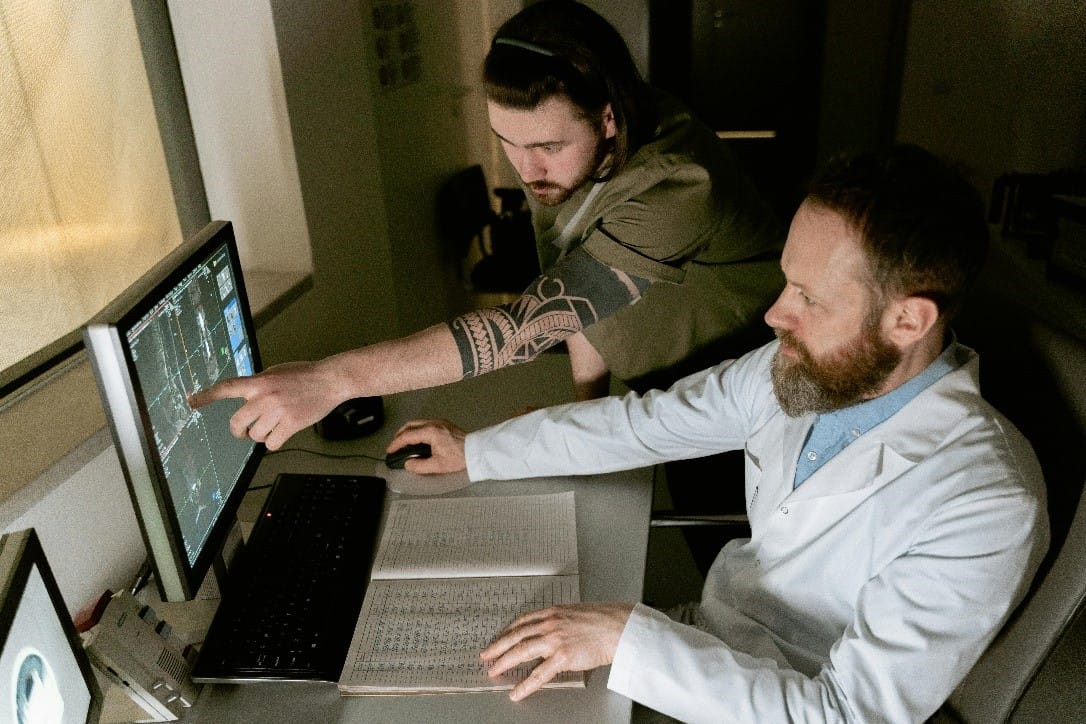
Medical personnel should have access to the latest and greatest healthcare technology so that they can feel prepared and confident in any situation. Integrating SIM labs into education and healthcare facilities has been shown to have numerous advantages for staff, students, teachers, and other medical professionals.
Whether you’re just starting out as a nursing student or you’ve been a practicing physician for decades, medical simulation labs offer plenty of value. These hands-on experiences create a supportive environment where everyone—from beginners to seasoned professionals—can sharpen their skills, try new techniques, and learn from mistakes without any risk to real patients.
This means the entire spectrum of healthcare staff, including students, nurses, doctors, EMTs, and specialists, can confidently refine procedures and build expertise. With no real-world consequences, it’s the perfect training ground for learning, experimenting, and growing in the medical field.
SIM labs stands for simulation labs. Medical SIM labs often consist of mannequins, video recording systems, debriefing software, microphones, simulating learning systems, and other technology that assist learning.
There are several types of simulation modalities used in these labs, each offering unique learning opportunities:
SIM labs mimic various healthcare scenarios and rooms such as labor/delivery rooms, operation tables, clinical procedures, and other emergencies. The primary goal of integrating SIM labs is to help healthcare personnel feel prepared while also offering a hands-on learning experience in a safe and controlled environment.
Beyond training, SIM labs serve four essential purposes in healthcare:
By bringing these core functions together, SIM labs create a well-rounded foundation for learning, evaluation, and patient care improvement in both healthcare and educational environments.
Keep reading to learn about the advantages of integrating a SIM lab into your healthcare or education facility.
Medical simulation has gained significant recognition among top accrediting bodies in healthcare education—including organizations like the American Nurses Credentialing Center (ANCC) and the Accreditation Council for Graduate Medical Education (ACGME). Many now strongly recommend, or even require, the use of simulation-based training to ensure healthcare professionals develop and maintain their clinical skills.
Simulation is valued because it creates a consistent, measurable, and risk-free setting to practice complex procedures and clinical decision-making. By meeting guidelines set forth by these accrediting organizations, medical and nursing schools can confidently prepare students for real-world patient care—helping ensure graduates are both competent and confident from day one.
One of the advantages of integrating SIM labs into your healthcare or educational facility is that it is a cost-effective solution. Setting up and running simulations can be more cost-effective than traditional training methods, especially in fields where real-world practice could be prohibitively expensive or dangerous.
For instance, medical simulations can save costs on consumables and equipment. It is also a great way to playback past footage for teaching methods instead of wasting money and time on new resources.
Experiential and interactive learning is the most beneficial way for a future nurse, doctor, or medical practitioner to learn. Reading about using a defibrillator in your health textbook differs from practicing on a designated CPR mannequin.
The hands-on learning environment will teach medical students experience, something that case studies and case reports would never be able to do.
Integrating medical SIM labs is an excellent way to promote collaboration in your team. Since most SIM labs have a debriefing room, the professor or doctor can observe and evaluate the simulation from afar.
This is a great way to enhance collaboration and feedback amongst your peers and team after the simulation. Afterward, it could be beneficial to host a group discussion to assess how the simulation went and what the students could have done differently to improve.
Part of being a good teacher is knowing that no two students are alike. Some students may need more practice than others, and that is normal. SIM labs allows you to customize the experience entirely for each student.
Simulation labs can be customized to specific learning objectives, allowing educators to create scenarios that address their learners’ unique needs. Additionally, simulations can be paused, adjusted, or replayed to accommodate different learning styles and paces.
Integrating medical SIM labs allows teachers and students to test their potential theories in a safe and controlled environment. This is an excellent way for the students to learn and to see the results of their hypotheses firsthand.
Simulation labs are a wonderful way to provide a controlled environment for conducting experiments and testing new technologies, processes, and theories. This can accelerate innovation and drive advancements in various fields.
The benefits of incorporating interactive learning for your medical students are endless. It often prepares students to feel more confident when potentially challenging situations arise. Integrating SIM labs and other audiovisual solutions can keep students more engaged and facilitate group discussions.
When students are taught through interactive learning, it may lead to better retention of the material. On the other hand, passive learning may show limited engagement and does not often promote collaboration or critical thinking skills.

Medical SIM labs for education and training needs the support of sound & video technologies to provide a real-world experience. CSAV Systems is an audiovisual installation company for businesses in New Jersey, New York, and other states, offering a Three-Year Warranty.
CSAV Systems custom-designs systems so that the operation of medical simulation labs is both user-friendly and efficient. Give your students and faculty the ability to be prepared for stressful situations by allowing them to practice in a simulation lab. Call us at 732-577-0077 or click here for a FREE systems analysis.