Room Automation With Sensors
A room might be reserved on the calendar but not actually used. In many offices, some rooms stay booked but empty, while other teams search for open space.
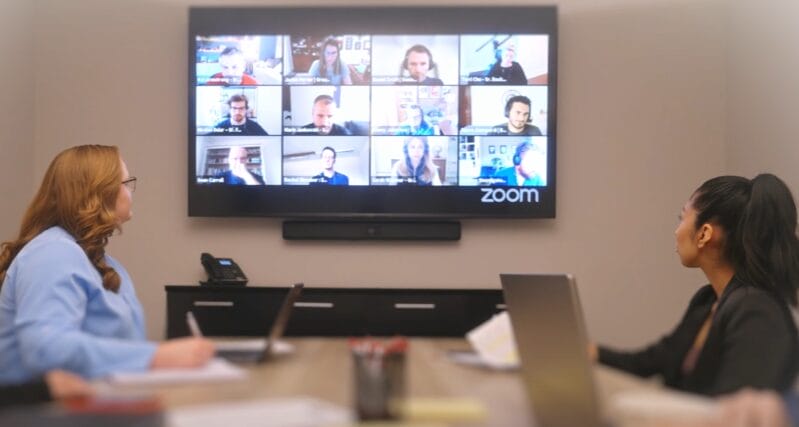
Occupancy sensors give the room real-time awareness and are one of the most useful types of automation in today’s conference spaces.
Once integrated into the room control architecture, sensors allow the system to respond to physical presence. Displays and conferencing equipment activate when occupants enter. If a meeting is scheduled but no one arrives, the system can validate occupancy automatically through check-in logic tied to the booking platform. After a defined window, the reservation can be released back into availability.
This level of automation improves space utilization without requiring employees to confirm attendance manually.
Besides making scheduling more accurate, occupancy data gives useful information. Facilities and IT teams can see how rooms are really used. Over time, they can spot busy times, rooms that are too big or too small, and trends that help with future planning.
Automation in this context is not about convenience. It supports planning, reporting, and resource planning across multiple conference environments.
Integrated Scheduling Panels
The scheduling panel outside the conference room shows the room’s status in real time. It needs to display accurate booking information from the company’s calendar.
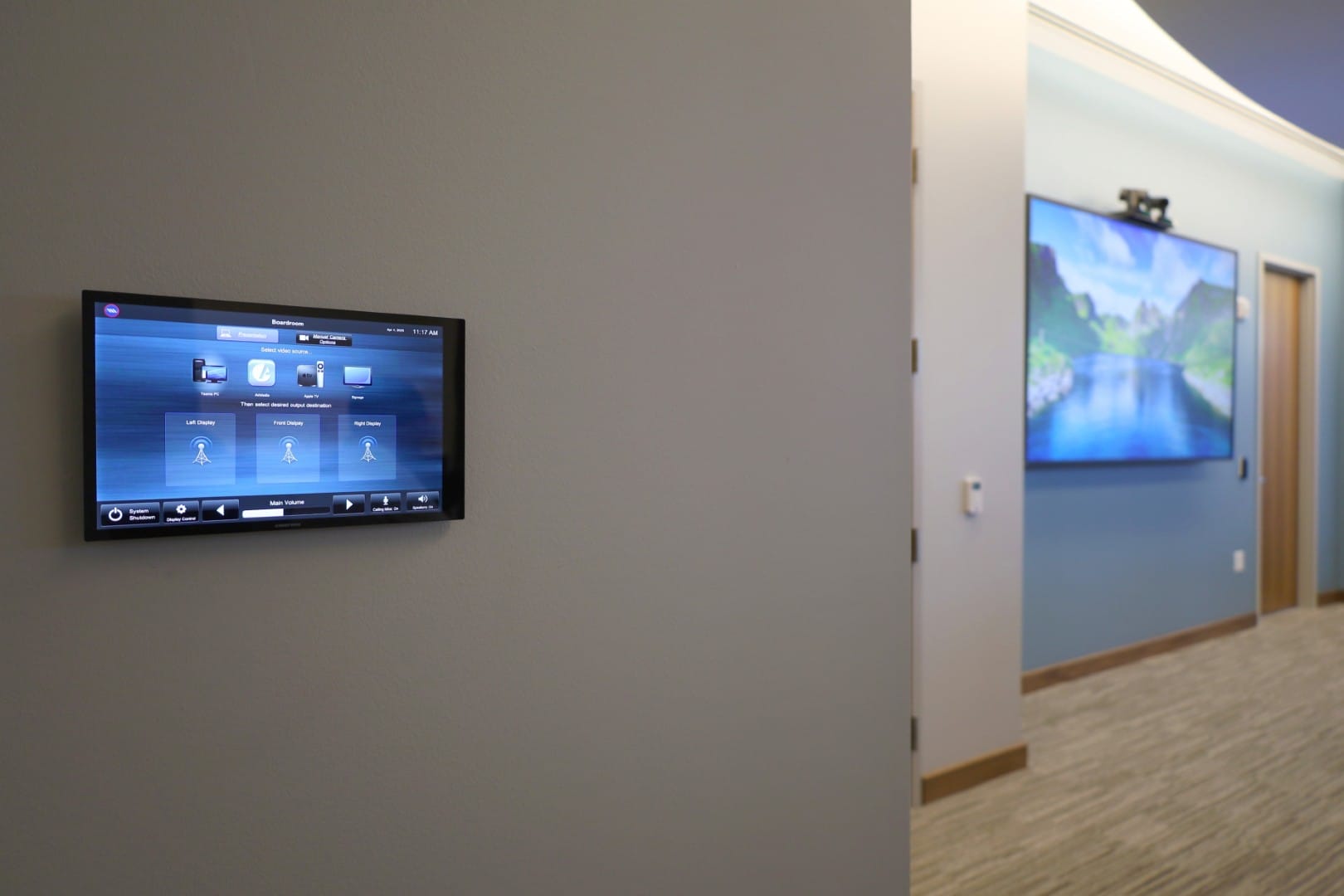
Good scheduling integration makes sure the panel, controller, and display all show the same meeting details.
When integrated with Microsoft 365, Outlook, Exchange, or Google Workspace, the panel displays current meeting status and upcoming reservations without delay. Employees can check availability immediately and reserve the room for short meetings without accessing a separate system.
The scheduling system should work together with the room. The panel, in-room controller, and display should all show the same meeting information.
This coordination relies on well-integrated projection and display technology that links scheduling details to the room’s control system.
When scheduling is set up across all systems, start and end times happen automatically, check-ins match real room use, and there’s less confusion about availability.
Consistency becomes especially important in multi-room deployments. When every room follows the same scheduling behavior, user friction declines and oversight becomes simpler.
One-Touch to Join Meetings
Many conference rooms still rely on a participant’s laptop to initiate meetings. This introduces authentication inconsistencies, device compatibility conflicts, and variable startup behavior.
An integrated room system eliminates that dependency.
When the meeting is scheduled through the company calendar, the room controller recognizes the event and presents it at the start time. A single tap launches the session directly from the room system.
This setup works with many communication platforms, like Microsoft Teams, Zoom, Webex, Yealink systems, and Crestron-controlled rooms.
Reliable one-touch functionality depends on properly aligned video conferencing systems that integrate platform certification, hardware, and control logic into a single framework.
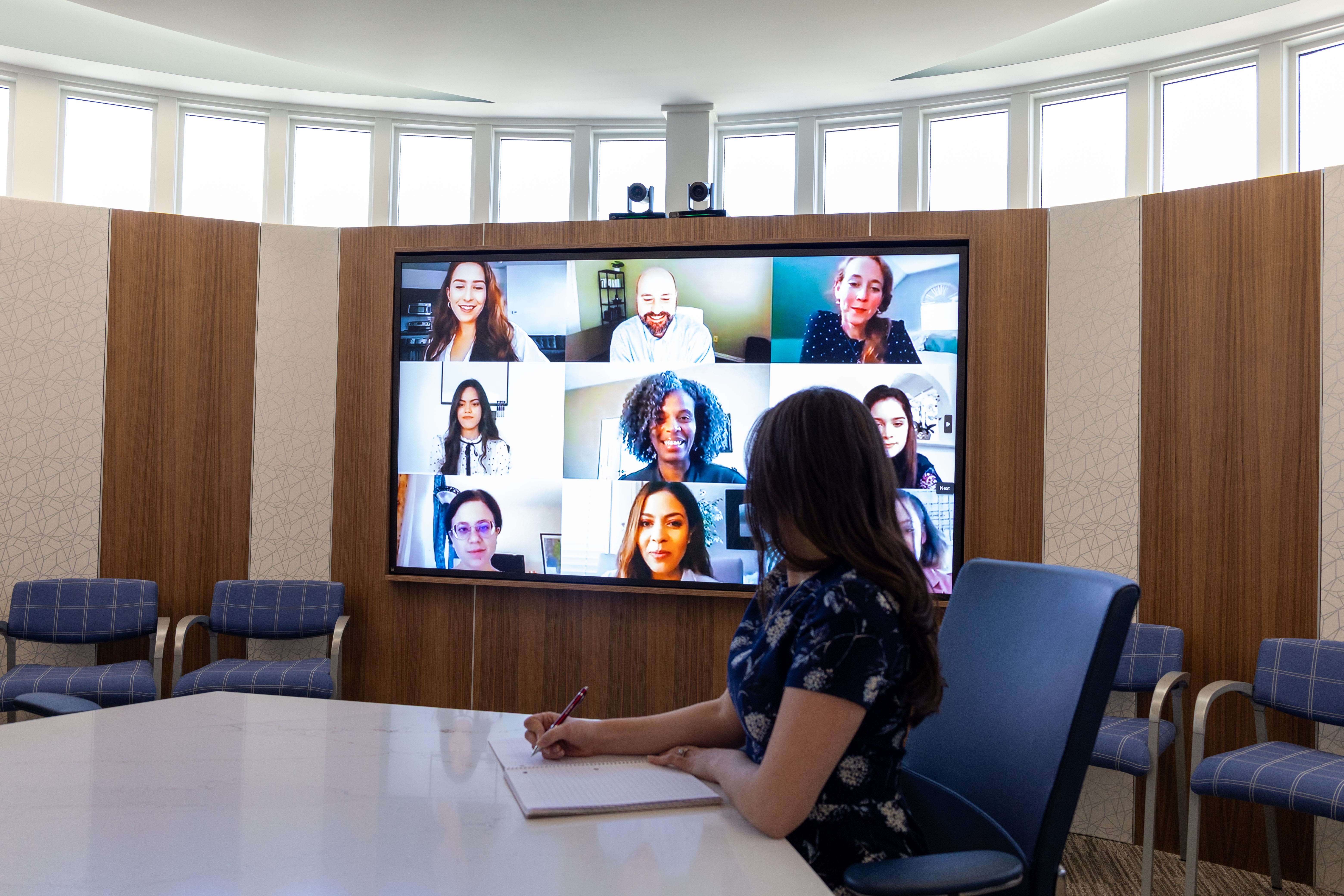
In hybrid workplaces, web conferencing should be built into the room itself, not just added as an extra application.
The goal isn’t just convenience. It’s to make meetings start smoothly without any technical steps.
In bigger setups, it’s important to standardize all rooms. When every conference space uses the same system, the experience is consistent. Employees don’t have to learn new steps for each room, and IT teams can manage updates and changes in one place instead of fixing each room separately.
When the Room Is Designed as a System
Conference rooms often underperform because components are added independently over time. A scheduling panel is installed. Later, conferencing hardware is upgraded. Later, displays are replaced. Each element functions, but the room does not behave as a unified system.
A better way is to start with the overall system design.
The calendar controls the process. Scheduling connects bookings to the control system. Automation reacts to people in the room. The conferencing platform starts right from the room controller. Every part follows the same setup.
In larger boardrooms and executive environments like Manasquan Bank, intelligent camera systems additionally improve hybrid performance through AI-powered cameras featuring automated framing and speaker tracking.
For many corporate environments throughout New York and New Jersey, smart conference rooms are treated as operational infrastructure. Ongoing performance oversight is supported through structured managed service agreements that address firmware updates, platform revisions, hardware lifecycle management, and proactive monitoring.
If conference rooms are still treated as isolated AV projects, the experience will remain inconsistent. When they are designed as integrated systems, they operate predictably.
Organizations reexamining their meeting environments should begin with system alignment rather than hardware selection.
Evaluate Your Conference Room Infrastructure
Before investing in new equipment, assess how your scheduling systems, conferencing platforms, and room automation are currently aligned.
CSAV Systems provides professional AV integration for boardrooms and conference spacesand structured conference room evaluations for organizations across New York and New Jersey seeking more predictable, system-driven meeting environments.
Call us at 732-577-0077 to request a consultation and free system analysis so we can review your current configuration and audio-visual setup, and to identify integration opportunities.